
Your Microsoft Enterprise Agreement is up for renewal in six months. If you haven’t started preparing, you’re already behind.
Microsoft’s sales machinery is highly orchestrated. They are designed to seamlessly upgrade your workforce to E5, lock in higher Azure commits, and maximize your annual spend. To counter this, you need a pragmatic, data-driven strategy.
Hope is not a negotiation tactic. Let’s cut the noise and get to work.
The E3 to E5 Upsell Trap
Microsoft wants every enterprise running on Microsoft 365 E5. They will bundle advanced security, voice, and compliance features to make the ROI math look irresistible. Don’t take the bait blindly.
Most organizations only utilize a fraction of the E5 stack. You often end up paying premium rates for Microsoft Defender or Purview while your security team stubbornly relies on CrowdStrike and Palo Alto. That isn’t synergy. That is pure shelf-ware.
Audit your current E3 deployment immediately. Identify exactly who needs E5 features—usually less than 30% of your workforce—and license the remainder with E3 plus targeted add-ons. Keep your licensing lean and strictly aligned with actual business requirements.
Baseline Your Actual Consumption
You cannot negotiate effectively if Microsoft knows your deployment environment better than you do.
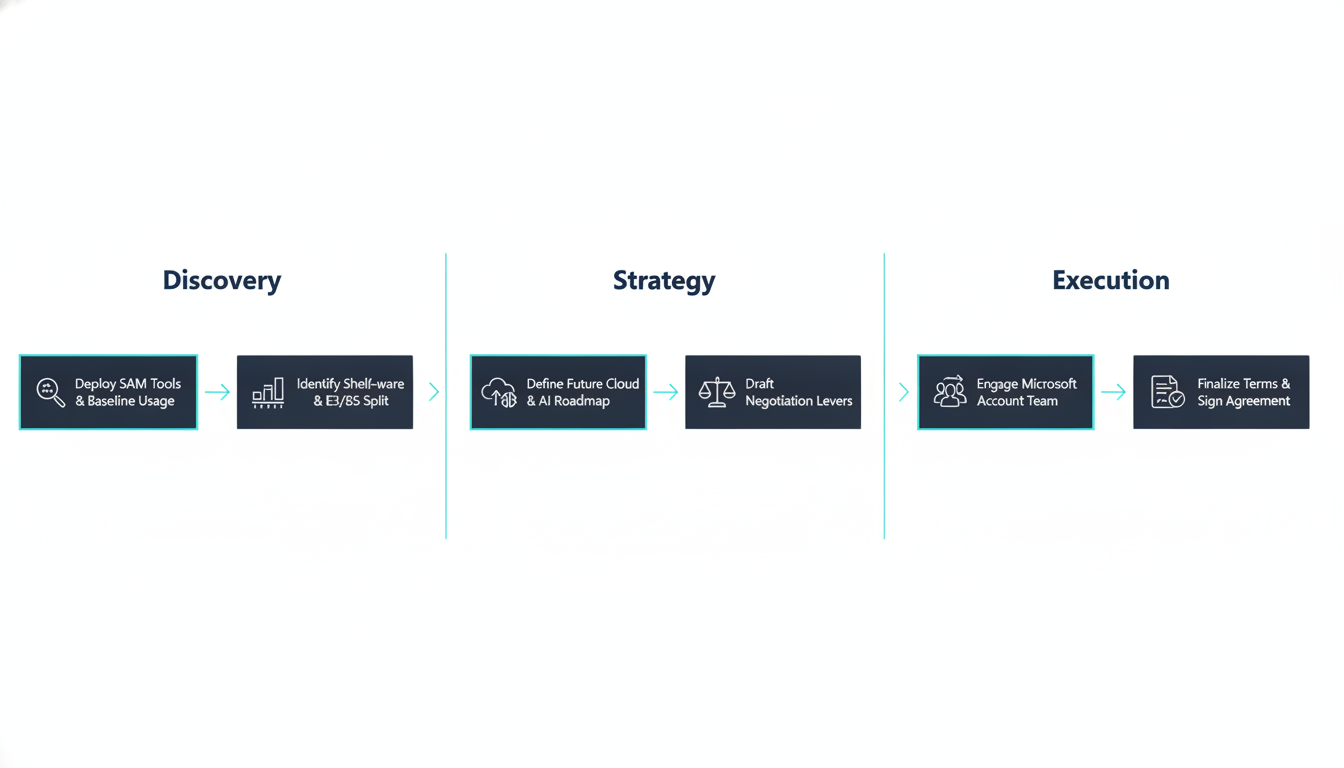
Deploy an enterprise Software Asset Management (SAM) tool like Flexera or Snow Software. You need to map exactly what is running, what is assigned, and what is gathering dust. Look specifically at active application usage over the last 90 days. If a user hasn’t opened Visio in three months, reclaim the license.
This isn’t just about counting seats. It’s about understanding your total cloud trajectory. If you are tracking 20% under your Microsoft Azure Consumption Commitment (MACC), you have a massive financial liability heading into renewal conversations.
Here is the rhythm you should follow to avoid a last-minute scramble.
Leverage Your Azure Roadmap
Azure is your biggest negotiation lever. Microsoft incentivizes their account executives heavily on cloud consumption and net-new workloads.
If your infrastructure team is planning a massive data center migration or rolling out generative AI using Azure OpenAI, do not give that information away for free. Weaponize your future roadmap.
Use your projected Azure spend to demand deeper concessions on your baseline Office 365 licensing. Force the vendor to sweeten the deal with Azure consumption credits, architectural support, or localized deployment funding. Make them earn your cloud growth.
Establish a FinOps Rhythm Post-Renewal
The work doesn’t stop once the ink dries. A three-year EA is a living, breathing financial ecosystem.
Establish a dedicated FinOps practice immediately following the renewal. Track your Azure resource tagging strictly, monitor inactive SaaS licenses on a monthly basis, and mandate quarterly true-up preparations.
Surprises at your annual true-up anniversary mean your internal governance is failing. Keep your IT procurement and infrastructure teams in total lockstep.
Trust, but verify.